
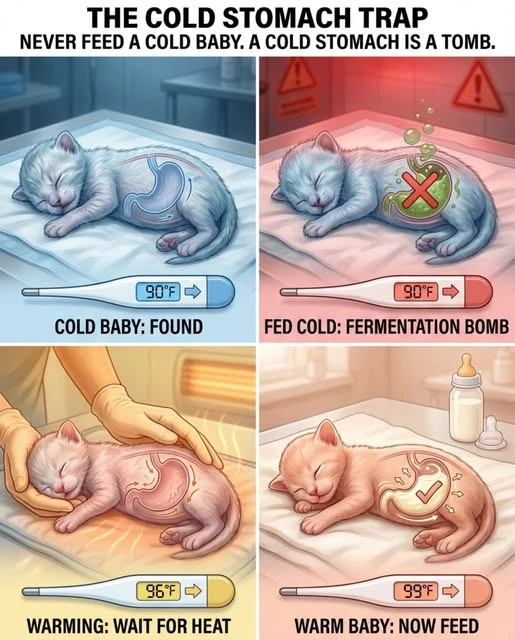
When someone finds a newborn kitten, the first impulse is almost always the same: feed it. That instinct is kind, but with neonatal kittens it can be dangerous if the kitten is cold. The reason is simple and grim. A chilled kitten cannot digest properly. If milk goes into a stomach that is too cold, it can sit there, sour, ferment, and contribute to a rapid decline. In rescue work, this is one of the most important rules to learn early: warm first, feed second, always.
Why cold changes everything
Newborn kittens are not good at regulating their own body temperature. They rely on their mother, littermates, and the nesting environment to stay warm. When they become chilled, the body starts conserving energy. Blood flow shifts away from the digestive system, the gut slows down, and the normal waves that move food along can stall.
That means formula does not behave the way you expect it to. Instead of being processed, it may remain in the stomach. A weak kitten may also swallow poorly, which increases the chance of inhaling milk into the lungs. Both problems can become emergencies quickly.
The hidden danger behind a well meaning feed
Feeding a cold kitten is risky for several reasons:
- Digestion slows or stops. Milk can sit in the stomach rather than moving through.
- Fermentation and gas build up. Stagnant milk can create pressure and discomfort, and it can worsen shock.
- Aspiration becomes more likely. A chilled, weak kitten may not coordinate swallowing.
- Energy crashes harder. The body is already stressed and cold uses up glucose fast.
So even though food feels like the obvious solution, warmth is the real first aid.
How to recognize a kitten that is too cold to feed
You do not need fancy equipment to notice the basics.
A kitten may be too cold if:
- The paws, ears, mouth, or belly feel cool
- The kitten is limp, unusually quiet, or weak
- The cry is faint or absent
- The suckle is weak or the kitten cannot latch
- Breathing is slow, shallow, or irregular
If you have a rectal thermometer, many rescuers use this practical guideline:
- Below about 96°F (35.5°C): do not feed yet
- Aim for roughly 98 to 100°F (36.7 to 37.8°C) before a normal feeding
If you do not have a thermometer, use common sense and behavior. A kitten that is warm, moving more, and showing rooting or searching behavior is much safer to feed than one that is cold and floppy.
The correct order of care
1) Warm the kitten first, slowly and safely
Gentle, steady warming is the goal. Avoid extreme heat.
Good options:
- Skin to skin contact against your chest
- A heating pad on low, wrapped in a thick towel, with space to crawl away
- A warm water bottle wrapped well
- A rice sock warmed carefully and tested on your wrist
Key safety points:
- Never put the kitten directly on a heat source
- Always provide a cooler spot so the kitten can move away
- Check often for overheating or dehydration
2) Wait for signs that the kitten is ready
Do not rush this. You are looking for a kitten that is warmer to the touch, more responsive, and able to swallow.
Ready signs include:
- Warm mouth and belly
- Increased movement and muscle tone
- Stronger cry
- Rooting behavior
3) Feed properly once warm
When the kitten is warm enough:
- Use kitten milk replacer, not cow’s milk
- Warm formula to body temperature and test it on your wrist
- Feed with the kitten belly down, head level, never on its back
- Go slowly, especially if the kitten is weak
If milk comes from the nose, coughing starts, or breathing changes, stop and get veterinary or experienced rescue help immediately.
A simple mantra that saves lives
In kitten care, the right action is not always the first instinct. The lifesaving habit is this:
Warm first. Feed second.
It is traditional advice in rescue circles because it has been proven the hard way, again and again. Warmth is what turns a fading kitten into one that can safely take nourishment. Once you respect that order, everything else gets easier: feeding, digestion, comfort, and recovery.
When to treat it as urgent
Seek help fast if you notice:
- Gasping, wheezing, or bluish gums
- Extreme limpness or unresponsiveness
- A hard, swollen belly
- Persistent weakness even after warming
- Vomiting, severe diarrhea, or formula from the nose
Newborn kittens can decline quickly, and early intervention matters.
If you tell me the kitten’s age signs (eyes closed or open, ears flat or lifting) and what supplies you have, I can lay out a practical step by step routine for warming and feeding that fits your setup.